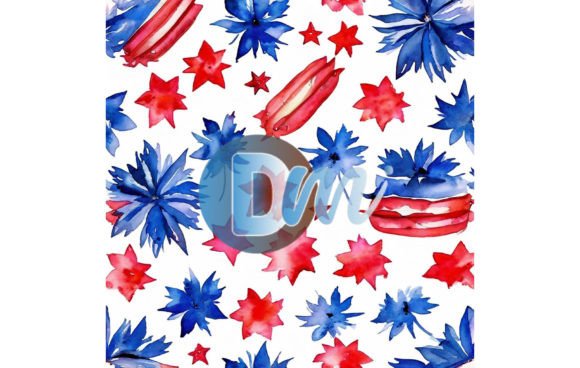
Using the 4th of July Seamless Pattern 75 in a Real-World Creative Workflow
Design resources that offer both visual appeal and practical flexibility are rare. When you find an asset that can be dropped into multiple projects without rework, it changes how you plan and execute. The 4th of July Seamless Pattern 75 is one of those assets. Whether you are a graphic designer preparing seasonal content, a small business owner refreshing your storefront, or a marketer building a coordinated campaign, understanding how to integrate this pattern into your workflow saves time and ensures consistency.
This article focuses on where the 4th of July Seamless Pattern 75 fits into a broader process, how to prepare it for different uses, and what to consider when you combine it with other tools and platforms. The goal is to give you a practical, repeatable approach rather than a list of vague possibilities.
What the 4th of July Seamless Pattern 75 Is and Why It Matters in a Process
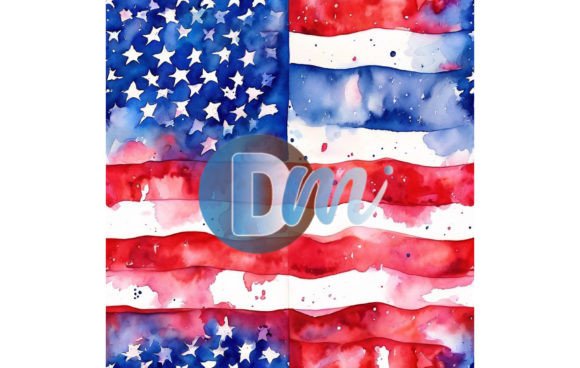
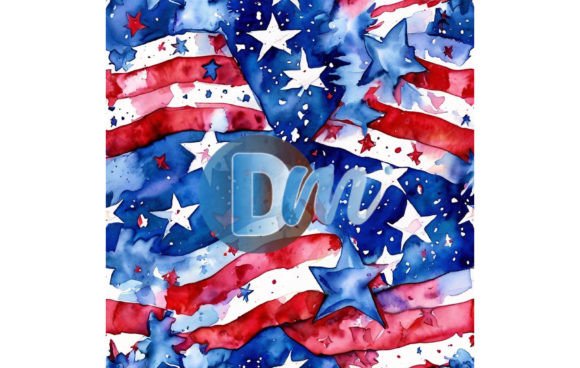
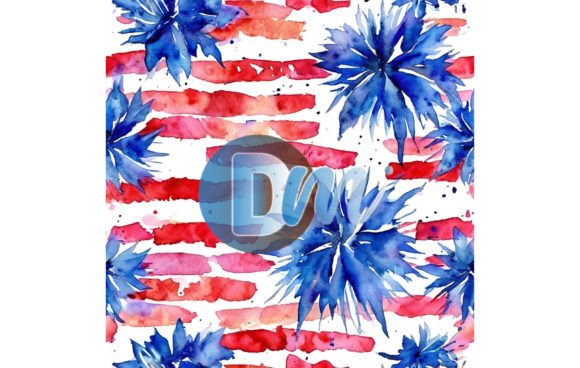
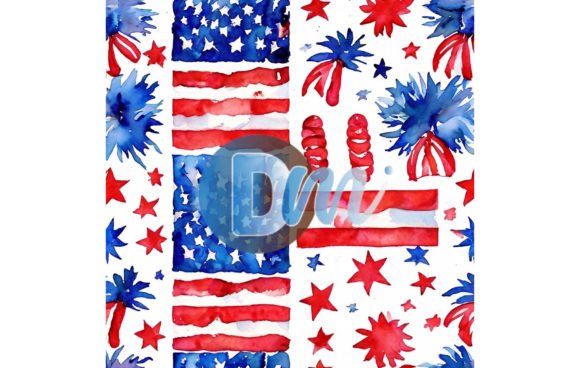
At its core, this pattern is a repeating design element built around Independence Day themes. The "seamless" aspect means it tiles without visible breaks, which is essential for backgrounds, wrapping paper, fabric prints, or any surface where continuity matters. The "75" likely refers to a specific resolution, scale, or version within a larger library of patterns.
In a workflow context, a seamless pattern like this serves as a foundational building block. Instead of designing a background from scratch for every project, you open the pattern, adjust it to your canvas size, and move forward. This cuts the production cycle significantly, especially when you are producing multiple deliverables for a single holiday or event.
The real value lies in how the pattern interacts with other layers, elements, and outputs. Because it is seamless, you can scale it, rotate it, or combine it with typography and illustrations without worrying about edge misalignment. This makes it a reliable asset for both digital and print workflows.
Before a Project: Planning and Asset Preparation
If you are running a seasonal campaign, preparation often starts weeks in advance. The 4th of July Seamless Pattern 75 can be part of your pre-production library. Before you begin designing, consider these steps:
- Categorize the pattern by theme, color palette, and format. Keep it in a folder labeled "Seasonal/July" or "Holiday Patterns" so you can find it quickly.
- Test the pattern at different scales to understand how it behaves. Some patterns look best at full resolution, while others need to be reduced for repeated tiling. Run a quick test on a small canvas before committing to a large project.
- Pair it with complementary assets early. If the pattern uses red, white, and blue, gather fonts, icons, and photos that share those tones. This prevents mismatched colors during execution.
This preparation phase is where you decide whether the pattern will be a background, a border, or a fill for specific shapes. Making that decision upfront saves revision time later.
During a Project: Integration with Tools and Layers
Once you start building, the pattern becomes part of your active workflow. Most design software, including Adobe Photoshop, Illustrator, Canva, and Affinity Designer, accepts seamless patterns as fill layers, pattern overlays, or imported image tiles. Here is how to integrate it smoothly:
- In Photoshop: Use the Pattern Fill layer or define the image as a pattern after opening it. This lets you adjust the scale and opacity without altering the original file.
- In Canva or similar web tools: Upload the pattern as an element and use the tiling function if available. If not, duplicate the image manually and align it using guides.
- In vector software: Place the pattern as a raster image and mask it to a shape. Alternatively, if you have a vector version, you can recolor it instantly.
During this phase, consider how the pattern interacts with text and other visual elements. High-contrast patterns may require a subtle overlay or reduced opacity to keep text readable. You might use a semi-transparent white or dark rectangle between the pattern and your copy, or apply a gradient mask to fade the pattern in certain areas.
For multi-page documents like invitations, menus, or social media carousels, apply the pattern consistently across all pages. This creates a cohesive visual identity that strengthens recognition. If you are working on a website header or email template, test how the pattern renders on different screen sizes. A seamless pattern that looks balanced on a desktop may appear too busy or too sparse on mobile.
After a Project: Quality Control and Repurposing
After you finish a deliverable, review how the pattern performed. Check for any tiling errors, color shifts, or resolution loss that occurred during export. If the pattern was used in print, request a proof to ensure the colors reproduce accurately. Digital screens and printers handle RGB and CMYK differently, so verify that the pattern's colors match your intent.
One of the strongest advantages of a seamless pattern is its reusability. The same 4th of July Seamless Pattern 75 that you used for a social media background can be repurposed for:
- Wrapping paper for holiday promotions
- Tabletop banners or event signage
- Website hero sections or blog post headers
- Email newsletter backgrounds
- Merchandise mockups for print-on-demand products
Keep a record of how you used the pattern and what settings worked best. This documentation is useful when the same pattern is needed in a future campaign. Over time, you build a reference system that speeds up every subsequent project.
For Small Business Owners and Retailers
If you run a store, either online or physical, seasonal patterns help create an immediate visual connection with customers. Use the pattern as a backdrop for product photos, a border for sale signs, or a repeating design on packaging. For physical storefronts, print the pattern on banners, hanging decorations, or shelf liners. Because the pattern is seamless, you can scale it to fit large surfaces without visible seams.
When preparing print files, always export at 300 DPI and confirm that the pattern tiles correctly over the entire print area. Work with your printer to understand their bleed and margin requirements, then adjust the pattern placement accordingly.
For Marketers and Content Creators
Consistency across channels is a common challenge. Using the same pattern on Instagram posts, Facebook covers, email headers, and landing pages reinforces the campaign message. Create a template file that includes the pattern as a locked background layer, then drop in new text or images for each piece of content. This approach reduces design time and ensures every asset looks like it belongs to the same series.
If you are running A/B tests on visuals, the pattern can be a control element. Keep the background the same across variations and change only the headline or call-to-action. This isolates the variable you are testing and gives cleaner results.
For Educators and Bloggers
Holiday-themed content often needs a visual lift. Use the pattern as a subtle background on slides, worksheets, or blog posts. Because it is seamless, you can extend it to full-page handouts or printable activities without awkward breaks. For digital classrooms, place the pattern behind a transparent overlay so text remains readable. This is especially useful for creating themed lesson plans, certificates, or event announcements.
For Freelancers and Creative Professionals
When you have multiple clients requesting seasonal materials, a pattern like this becomes a time-saving asset in your toolkit. You can offer it as an optional upgrade in your design packages, or use it behind the scenes to speed up production. Keep a master file with the pattern applied to common canvas sizes (1080x1080 px, 1920x1080 px, 8.5x11 inches, etc.) so you never have to re-import and re-scale it.
If you sell templates or digital products, consider bundling the pattern with complementary designs. A seamless pattern alone is useful, but combined with coordinated icons, borders, and typography sets, it becomes a complete kit that buyers can use immediately.
Compatibility and Technical Considerations
Before using the 4th of July Seamless Pattern 75 in any project, verify its file format and resolution. Common formats include PNG, JPEG, or SVG. Each format has trade-offs:
- PNG preserves transparency and works well for digital use, but file sizes can be large at high resolutions.
- JPEG compresses the image, which is fine for backgrounds that do not require transparency, but compression artifacts can appear if repeatedly saved.
- SVG is ideal for scaling without quality loss, but not all raster-based tools handle vector patterns natively.
If the pattern is provided in a raster format, keep a copy at the highest resolution available. Downscale for specific uses rather than upscaling, which degrades quality. For print, 300 DPI is standard. For web, 72 DPI is adequate, but always check the output dimensions.
Color space matters. If you plan to print, convert the pattern to CMYK and check for color shifts. Reds and blues, common in Independence Day themes, can look different when printed compared to a digital screen. Run a test print on the actual paper or material you intend to use.
Long-Term Use and Asset Management
A single pattern can serve you for years if you maintain it properly. Store the original file in a location you can access from any device, such as a cloud drive or a network folder. Use a consistent naming convention that includes the theme, resolution, and any variations. For example, "4th-July-Seamless-75_300DPI_RGB.png" tells you exactly what the file contains without opening it.
As you build a library of seasonal patterns, tag them with keywords in your asset management system. Tags like "patriotic", "stars", "stripes", "summer", and "holiday" make them searchable. When next July arrives, you can locate the pattern in seconds rather than digging through folders.
Review your patterns after each season. If the 4th of July Seamless Pattern 75 performed well in multiple contexts, consider variations for the next year. You might order a color variant or a complementary pattern that can be layered with it. This iterative approach turns a single asset into a long-term resource.
Wrapping Up a Practical Integration
Assets like the 4th of July Seamless Pattern 75 earn their place in a workflow not because they are flashy, but because they reduce friction. When you can open a file, apply it in seconds, and trust that it will tile correctly across both digital and print projects, you free up mental energy for decisions that actually require creativity. The pattern is a tool, and like any tool, its value depends on how well you prepare it, how consistently you use it, and how thoughtfully you combine it with other elements.
Start by testing the pattern in one or two small projects. Learn its characteristics, note how it behaves in your preferred software, and build a small set of templates around it. Once that foundation is in place, you can scale its use across campaigns, products, and platforms with confidence. That repeatable process is what turns a simple design asset into a reliable part of your workflow.