How to Use the 4th of July Seamless Pattern 40 in Your Creative Workflow
When you’re running a small business, managing a brand’s visual identity, or producing content around a major holiday like Independence Day, every asset needs to earn its place. The 4th of July Seamless Pattern 40 is one of those versatile design elements that can save you time, maintain consistency across projects, and give your work a polished, thematic look. Whether you’re a freelancer designing social media posts, an educator creating classroom handouts, or a marketer planning a seasonal campaign, understanding how to slot this pattern into your process can make a real difference in output quality and turnaround speed.
Understanding the Asset: What Makes Pattern 40 Different
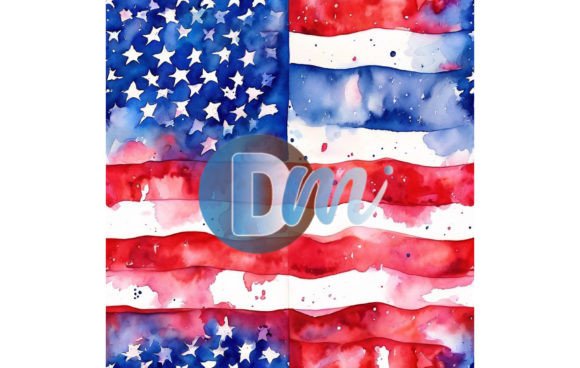
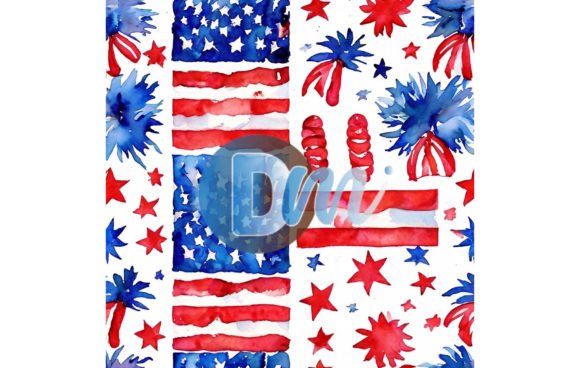
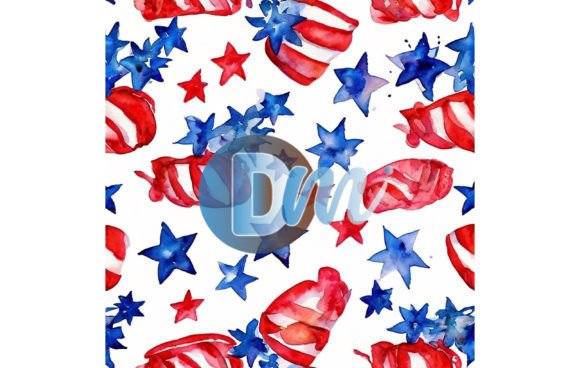
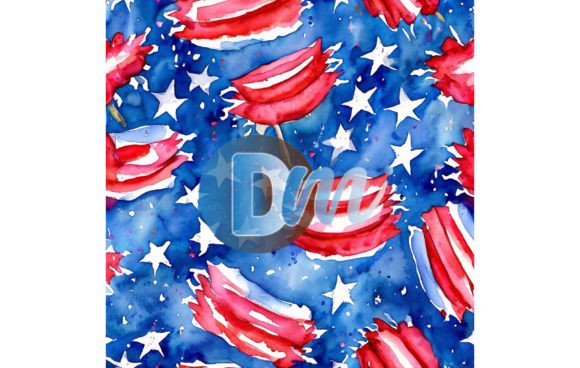
Not all seamless patterns are created equal. The 4th of July Seamless Pattern 40 is a repeatable tile designed to fill any surface without visible seams. Its motifs typically draw from classic American independence iconography—stars, stripes, subtle flag textures, and sometimes fireworks or bunting—but in a version optimized for digital and print use. What sets Pattern 40 apart is its color balance, scale, and the careful spacing that allows it to function as a background without overwhelming foreground content. Knowing these characteristics helps you decide when and where to use it, not just how.
From a workflow perspective, this pattern is a reusable component. You can treat it like a custom texture, a base layer, or even a starting point for more elaborate designs. By understanding its internal structure—repeat size, color palette, and motif density—you can predict how it will behave in different software environments and under various scaling conditions. This upfront knowledge reduces trial-and-error later.
Before You Start: Integrating Pattern 40 into Pre-Production
Effective use of the 4th of July Seamless Pattern 40 begins before you open your design tool. In the planning phase, consider where this pattern fits into your overall visual system. Are you building a collection of social media templates? Designing a line of printed party favors? Creating a website header for a July promotion? Each use case demands slightly different preparation.
Asset Management and Organization
If you work with a library of patterns, textures, and graphics, organize Pattern 40 alongside other seasonal assets. Create a folder structure by holiday or theme, and tag files with keywords like “seamless,” “4th of July,” “Pattern 40,” and “background.” This makes retrieval fast when you’re under a tight deadline. I recommend storing both the original high-resolution file (preferably at 300 DPI for print) and a color-reduced version for web use. The 4th of July Seamless Pattern 40 may come in multiple colorways, so note which variant works best for light or dark backgrounds.
Software Compatibility Checks
Pattern 40 might be provided as a JPEG, PNG, or even a vector file. Before production begins, confirm that the format is compatible with your primary tools—Adobe Photoshop, Illustrator, Canva, Procreate, or Affinity. If it’s a raster image, check its resolution relative to your intended output size. For a website background, a 1920×1080 tile is usually fine; for a large banner, you may need to scale up or request a higher resolution. Testing this early prevents last-minute distortions.
During the Creative Process: Applying Pattern 40 in Real Projects
Once pre-production is sorted, the pattern becomes a functional layer in your design. Here are concrete ways to integrate the 4th of July Seamless Pattern 40 into active workflows, based on common professional scenarios.
Web and Interface Backgrounds
For landing pages, email headers, or social media banners, use Pattern 40 as a repeating background. Because it’s seamless, you can set it as a CSS background-image or import it directly into a design canvas. To avoid visual clutter, lower the opacity to 10–20% or apply a subtle gradient overlay. This maintains the patriotic vibe without compromising text readability. If you’re building a one-page site for an event, the pattern can reinforce the theme consistently across sections.
Print Collateral and Packaging
Small business owners producing product labels, invitation cards, or banners for July 4th sales can use Pattern 40 as a full-bleed background or accent panel. In print, pay attention to color profile (CMYK) and bleed margins. Many seamless patterns are designed in RGB; converting early ensures accurate color reproduction. The 4th of July Seamless Pattern 40 works particularly well on small items like gift tags or wine bottle labels because the repeat is subtle enough to not overwhelm the text.
Social Media and Content Templates
Freelancers managing multiple client accounts can create a set of reusable templates with Pattern 40 as the base layer. For Instagram stories, crop the pattern to a vertical 9:16 ratio and add overlaid graphics. For YouTube channel art or Facebook cover photos, the pattern can fill the background while branding sits in the foreground. Since the pattern is seamless, you can resize the canvas without worrying about tile junctions. This speeds up content creation during the busy holiday season.
Post-Project Repurposing and Long-Term Use
The lifecycle of the 4th of July Seamless Pattern 40 doesn’t end when the project is delivered. Smart workflow design treats such assets as evergreen resources that can be reused, adapted, or archived for future needs.
Repurposing for Next Year
After the holiday, store Pattern 40 in an annual assets folder. Next June, you can pull it out and modify the color palette slightly using hue/saturation adjustments to match a new campaign’s tone. Because the motif itself is classic, it stays relevant year after year. This approach dramatically reduces the time spent on seasonal design from scratch.
Creating Derivatives and Variants
If you have access to vector versions, you can extract individual elements from Pattern 40—like a single star or a stripe segment—and use them as icons, borders, or dividers elsewhere. This gives you a cohesive visual language across multiple touchpoints. Even as a raster, you can mask layers on top of the pattern to create unique compositions without rebuilding the tile.
Quality Control and Archival
Maintain a master copy of Pattern 40 in its original resolution. When repurposing, never overwrite the original. Instead, make copies and apply edits nondestructively (using adjustment layers in Photoshop or linked files in Illustrator). This preserves the asset for future use and prevents degradation from repeated saves. If the pattern is used across many projects, periodically check that the file hasn’t been inadvertently compressed or corrupted.
Practical Implementation Tips for Smooth Integration
Even the best pattern can cause friction if it’s not handled well. Here are specific, actionable tips for incorporating the 4th of July Seamless Pattern 40 into your routine without disrupting your flow.
- Test scaling early. Load the pattern into your canvas at different sizes. Some patterns repeat too frequently at small scales, creating a busy texture. Others become too sparse when enlarged. Find the sweet spot that complements your content. Scale the pattern object (or adjust the tile size in software) before building the rest of the layout.
- Use blending modes creatively. In layered compositions, set the pattern layer to Multiply, Overlay, or Soft Light. This allows the pattern to interact with colors beneath it, producing richer results. For example, a red gradient behind Pattern 40 set to Multiply can unify the design while preserving the star motifs.
- Pair with complementary textures. If Pattern 40 is heavily dominated by stars, balance it with a subtle noise or paper texture to add depth. Avoid pairing it with another strong pattern, as that can cause visual competition. Simpler is usually better for backgrounds.
- Keep a color palette reference. Extract the dominant colors from Pattern 40 and use them for typography, icons, and other elements. This builds cohesion without relying solely on the pattern itself. Tools like Adobe Color or Canva’s color picker make this quick.
- Consider accessibility. For web use, ensure that text overlaying the pattern has sufficient contrast. The 4th of July Seamless Pattern 40 often mixes red, white, and blue, which can create low contrast with certain text colors. Use a dark overlay or a white text with a heavy drop shadow to maintain readability.
How Pattern 40 Interacts with Other Tools and Resources
No design asset exists in isolation. The 4th of July Seamless Pattern 40 works best when combined with a thoughtful selection of complementary resources. Photographs of fireworks, vector illustrations of flags or eagle motifs, and typefaces with a clean, modern feel all align well with this pattern. Avoid overly ornate scripts that compete with the pattern’s detail. Sans-serif fonts (like Montserrat, Lato, or Open Sans) tend to sit cleanly on top.
If you use design systems like Figma component libraries, you can encapsulate Pattern 40 as a shared style or a component background. This allows team members to apply the pattern consistently across multiple pages. For Canva users, save the pattern as an element in your brand kit so it’s one click away. The goal is to reduce friction and make the pattern a natural part of your asset ecosystem, not a one-off import you hunt for each time.
Measuring Success: When Has Pattern 40 Done Its Job?
From a productivity standpoint, you should be able to judge the effectiveness of the 4th of July Seamless Pattern 40 by how much time you saved and how consistent the output looks across different media. If you can launch a campaign with five different deliverables (email, social, web, print, video) all sharing the same background motif without extra design work, the pattern has earned its keep. Similarly, if the pattern reduces the need to create custom illustrations from scratch, it’s a high-value asset.
On a qualitative level, ask: does the pattern reinforce the holiday message without dominating? Does it scale nicely on both a phone screen and a poster? If yes, then it’s integrated well. If not, revisit your implementation—maybe the opacity is too high, or the repeat size needs adjustment.
Final Observations on Workflow Integration
The real power of the 4th of July Seamless Pattern 40 lies in its repeatability—not just as a visual tile, but as a process element. Once you incorporate it into your pre-production, production, and post-production phases, it becomes a reliable shortcut. You stop thinking about “how do I make a patriotic background?” and start focusing on the message, the content, and the audience.
For professionals who value efficiency, consistency, and quality, a well-chosen seamless pattern is a small investment with outsized returns. Whether this is your first time using Pattern 40 or you’re adding it to an existing library, treat it as a building block rather than a final decoration. That mindset shift transforms it from a simple graphic into a genuine workflow enhancer.