How to Use the 4th of July Seamless Pattern 116 in Your Creative Workflow
Planning a project around a seasonal theme often starts with the right visual foundation. For many creators, small business owners, and marketers, the 4th of July Seamless Pattern 116 serves as that foundation. This pattern is more than just a repeating design; it is a pre-constructed asset that can streamline production, maintain consistency, and reduce the time spent on repetitive layout tasks. Understanding where this pattern fits into your broader process can help you move from idea to finished product with fewer bottlenecks.
What the 4th of July Seamless Pattern 116 Actually Is
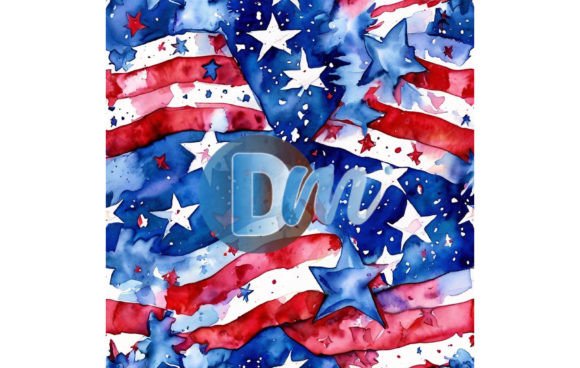
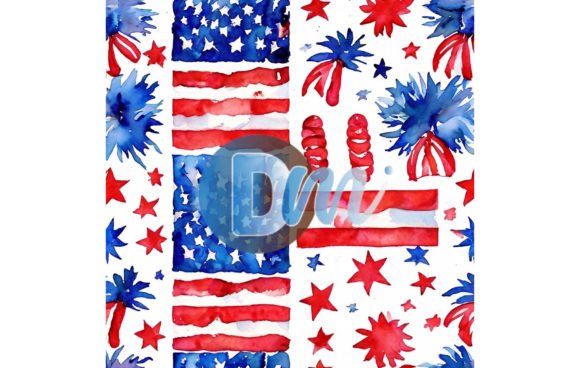
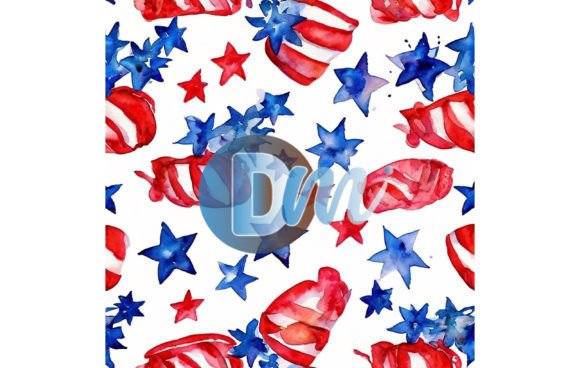
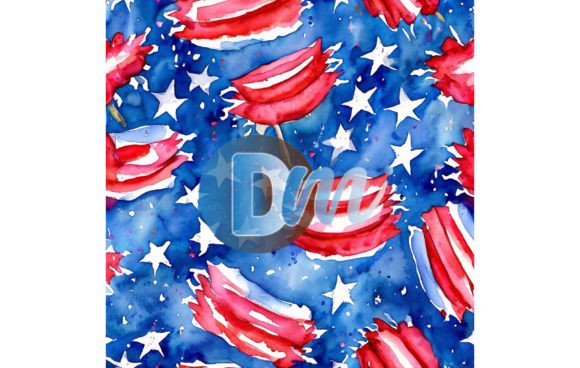
At its core, the 4th of July Seamless Pattern 116 is a tileable graphic element built around patriotic motifs—stars, stripes, red, white, and blue Americana. What makes it useful in a workflow is its technical quality: the seams align perfectly, colors are balanced for both screen and print, and the scale of the pattern is suitable for a wide range of applications. Whether you are wrapping a product, designing a social media background, or creating physical merchandise, this pattern eliminates the need to build a repeat from scratch.
For professionals who value efficiency, this pattern is a starting point. It is not a final design by itself but a modular component that interacts with other assets like typography, logos, or photographic overlays. The number reference—116—likely indicates a specific color variant or motif density, which helps when coordinating with other patterns in a collection.
Before: Preparation and Planning
When you are in the planning phase of a seasonal campaign, the 4th of July Seamless Pattern 116 can act as a style guide. By loading it into your mood board or asset library early, you set a visual tone that influences all subsequent decisions—font choices, accent colors, and even product shapes. This foresight prevents mid-project mismatches. For example, if you are designing a line of Independence Day party supplies, seeing the pattern next to your other mockups helps you decide whether to use it as an all-over print or as a border element.
It also helps with resource allocation. Knowing that the pattern is ready to use means you can skip the tedious steps of creating and testing patterns. Instead, you focus on layout, copy, and distribution logistics. This is especially valuable for freelancers and small business owners who have tight turnaround windows between Memorial Day and the Fourth.
During: Execution and Production
In the active phase of a project, the pattern becomes a repeatable background or fill. Here is where its seamless quality shines. When you drop the 4th of July Seamless Pattern 116 into a design file, you can trust that it tiles correctly across any size canvas—from a business card to a banner. That reliability cuts down on technical adjustments and lets you iterate faster.
For instance, if you are an educator creating bulletin board decor, you can scale the pattern to fit a specific ratio without worrying about awkward edge breaks. If you are a marketer building a set of social media templates, you can use the pattern as a consistent backdrop across posts, maintaining brand identity without recreating the background each time. The pattern also interacts well with blending modes and opacity adjustments, giving you flexibility to layer it under text or over photographs.
After: Quality Control and Long-Term Use
After the project is finished, the 4th of July Seamless Pattern 116 remains useful for follow-up tasks. Need to create a matching sticker or a last-minute flyer? Open the pattern file and apply it instantly. Because it is a seamless pattern, it works for both digital and physical outputs without extra cleanup.
For long-term storage, tag the pattern in your asset library with keywords like 4th of July, seamless, pattern 116, red white blue. This organization makes retrieval quick next year. Many creators reuse seasonal patterns year after year, updating only the text or product photos. If you track usage, you may find that the pattern becomes a foundational asset in your quarterly rotation—especially if you produce content for multiple clients or platforms.
How the Pattern Interacts with Tools, Assets, and Decisions
The 4th of July Seamless Pattern 116 does not exist in isolation. It interacts with other elements in your workflow in predictable ways:
- Design software: Works directly in Adobe Illustrator, Photoshop, Canva, Procreate, and vector tools. For raster-based workflows, ensure the file is high resolution (300 DPI for print). In vector environments, you can scale infinitely without quality loss.
- Print-on-demand platforms: Upload the pattern as a fill for product templates (T-shirts, mugs, notebooks). Because it is seamless, the print will wrap around products smoothly. Check the platform's color profile if you switch from RGB to CMYK.
- Brand guidelines: If your business uses a specific shade of red or blue, you can hue-shift the pattern to match. This keeps the visual impact while aligning with existing branding.
- Collaboration: Share the pattern file with a remote team. Because it is self-contained, designers, copywriters, and vendors can all work from the same visual reference without confusion.
Furthermore, the pattern influences decisions about layout. A dense, busy pattern works best as a background with simple typography. A more open pattern can accommodate overlays. Knowing the density of 4th of July Seamless Pattern 116 (which is moderate) helps you decide where to place focal points.
For Small Business Owners and Entrepreneurs
Use the pattern as an accent on your product packaging or promotional materials. For example, apply it to the inside of a gift box lid or as a strip on a sticker sheet. This adds value without overwhelming the product. Keep a digital copy in both layered and flattened formats so you can quickly generate variations.
For Content Creators and Bloggers
Incorporate the pattern into seasonal blog headers, Pinterest pins, and email newsletter backgrounds. Because it is seamless, you can create a responsive design that looks consistent on mobile and desktop. Test the pattern with your standard text overlay to ensure contrast—adjust opacity if needed.
For Educators and Hobbyists
The pattern works well for classroom decorations, worksheets, and holiday crafts. When resizing for printing, always do a test page to confirm colors render accurately on your printer. Use the pattern sparingly on worksheets to avoid distracting from content.
For Marketers and Freelancers
Set up a reusable template in your design tool using the pattern as a background. Then swap out copy and images for each client. This template approach improves consistency and speeds up delivery. Keep a master file with the pattern locked and layers organized for easy editing.
Factors That Affect Usability and Long-Term Value
Preparation: Before dropping the pattern into a project, open it in your design software and check the tile boundaries. Even though it is seamless, some software handles patterns differently. If you plan to use it across multiple tools, save a copy as a standard image file (PNG or JPG) at a high resolution for raster programs, and a vector file (AI, EPS, SVG) for scalable needs.
Compatibility: The pattern works best with current versions of major design applications. If you are using older software, convert the pattern to a bitmap format first. Also consider the medium: for digital use, sRGB color space is standard; for print, convert to CMYK and expect slight shifts in reds and blues.
Organization: Store the pattern in a dedicated folder for seasonal assets. Include a metadata file that lists the pattern number (116), the theme, the color palette, and the resolution. This makes future retrieval fast, especially if you accumulate many seamless patterns over years.
Efficiency: The biggest time saver comes from not having to design a repeat pattern yourself. Instead, you invest a few minutes in scaling and positioning. This frees up hours for copywriting, product photography, or marketing strategy.
Consistency: Using the same pattern across a campaign ensures visual unity. If you produce a series of social media posts, landing pages, and physical flyers, the pattern ties them together. This consistency builds recognition and trust with your audience.
Quality control: Before final output, zoom in to check the repeat. Although the pattern is seamless, layering it with other graphics can introduce artifacts. Also run a test print on a small scale to verify color and alignment. This is especially important if you are using the pattern for commercial merchandise.
Long-term use: Unlike a one-off custom graphic, a well-stocked pattern library gives you reusability. Next year, you can update the pattern with a new color tint or combine it with different motifs. Tagging it with the year (e.g., "2025") helps track freshness, but the 4th of July Seamless Pattern 116 can remain part of your core seasonal toolbox for years if you store it properly.
Bringing It All Together in Your Workflow
To integrate the 4th of July Seamless Pattern 116 smoothly into your routine, start with a clear objective. Decide whether the pattern will be a background, a fill, an accent, or a texture. Then prepare your file and canvas settings accordingly. If you work in a team, share a usage guide that explains the pattern's intended scale and color limitations.
For a typical workflow: open a new document, place the pattern as a fill or smart object, adjust layer blending, add your primary content, and then review the composition at actual size. If the pattern feels too dominant, reduce opacity or add a gradient mask. If it feels too subtle, duplicate the pattern layer and experiment with overlay modes.
Remember that a seamless pattern is a tool, not a crutch. It should enhance your message, not overpower it. By understanding where the 4th of July Seamless Pattern 116 fits in the sequence of planning, execution, and follow-up, you can use it to produce polished, cohesive work without unnecessary repetition.
Ultimately, the value of any pattern lies in how well it integrates into your existing processes. When chosen thoughtfully and managed systematically, a pattern like this becomes a reliable component that supports your creative and business goals—season after season.