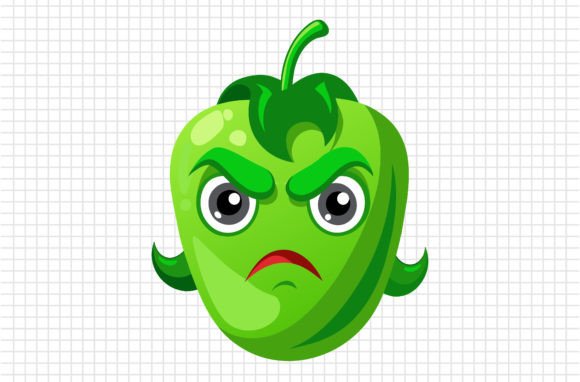
Using a Green Capsicum Illustration Vector in Creative and Commercial Workflows
A single vector file might seem like a small asset, but a well-crafted green capsicum illustration vector can plug into dozens of workflows across marketing, publishing, education, and product design. Unlike a generic stock photo, a vector illustration of a green capsicum offers scalability, editability, and a clean aesthetic that raster images cannot match. Understanding exactly where this asset fits in your production process—and how to prepare, adapt, and reuse it—can save you time and keep your visual output consistent.
What a Green Capsicum Illustration Vector Actually Is
A green capsicum illustration vector is a digital graphic file—typically in SVG, AI, EPS, or similar format—that represents a green bell pepper using mathematically defined paths rather than pixels. This means you can scale it to billboard size or shrink it to a mobile icon without any loss of quality. The vector itself may range from a simple flat-icon style to a highly detailed botanical rendering with gradients and shading.
In a practical sense, the vector sits within your asset library as a modular component. You can isolate it, recolor it, combine it with other vectors, or animate it. Because it is resolution-independent, it works across print, web, video, and presentation environments without requiring multiple versions. For anyone who produces visual content regularly, having a reliable green capsicum vector means you never need to reshoot, rescan, or relicense a pepper image again.
Planning Your Asset Before You Download or Create
Before you even open the vector file, consider the broader process it will serve. A green capsicum illustration vector intended for a recipe blog will need different styling than one used in a farm-to-table restaurant menu or a nutrition education handout.
Ask yourself three questions early:
- What is the output medium? Print requires CMYK-ready files with sufficient detail for large formats. Digital screens use RGB, and simpler vectors often load faster on websites.
- What is the visual style of the surrounding content? A minimalist flat vector works well in modern UI or infographics, while a textured, layered vector suits rustic branding or editorial layouts.
- How will the vector be combined with other elements? If you plan to group the capsicum with other vegetables, text, or icons, ensure the stroke weights, color palette, and perspective are compatible.
Taking ten minutes to map out these requirements before sourcing the vector prevents rework later. It also helps you choose between purchasing a premium vector, downloading a free one, or commissioning a custom illustration.
Preparing the Vector for Your Workflow
Once you have the green capsicum illustration vector file, some preparation is usually needed before it fits neatly into your project. Even if the vector looks perfect in preview, pay attention to these factors.
File Format and Software Compatibility
Most vector editors—Adobe Illustrator, Affinity Designer, Inkscape, CorelDRAW, and even Canva—can open SVG files. However, if you receive an EPS or AI file and do not have Adobe software, you may need to convert it. Save an SVG copy for maximum interoperability. If you are working in a web context, SVG is the native choice because it can be embedded directly in HTML, styled with CSS, and manipulated with JavaScript.
If your team uses a mix of design tools, agree on a standard format. Storing the vector as SVG plus a high-resolution PNG fallback covers nearly every scenario.
Color Adjustments and Brand Alignment
A generic green capsicum vector might arrive with a vivid lime hue that does not match your brand palette. In a vector editor, you can recolor the fills and strokes in seconds. Keep a brand color swatch file handy so you can apply the correct shade of green, adjust highlights, or even create a monochrome version for secondary use.
When recoloring, pay attention to any gradient or mesh that may be embedded. Some vectors use complex gradient meshes that require a few extra clicks to edit. If you anticipate frequent recoloring, choose a flat-style vector with solid fills—it will be faster to modify and more predictable across applications.
Layer Structure and Grouping
Open the vector file and check how the layers are organized. A well-built vector will have logically named layers (e.g., "stem," "body highlight," "shadow") and grouped elements. If the vector is a single merged shape, you lose the ability to edit parts independently. Consider restructuring the file yourself if you plan to use the capsicum in multiple contexts—for example, animating the stem separately or applying a drop shadow only to the body.
Consolidating the layer structure also helps when you hand off the file to a developer who needs to manipulate the vector in code.
Integrating the Vector Into Different Workflows
The real value of a green capsicum illustration vector emerges when you integrate it into your actual production process, whether that is a one-off social media post or a recurring monthly publication.
In Content Creation and Marketing
For a food blogger or recipe developer, the vector can appear in multiple places: the hero image of a blog post, a Pinterest pin, an Instagram story background, and a printable recipe card. Because the vector is scalable, you can use the same file across all these touchpoints without quality loss. Create a template document that includes the capsicum vector as a background element, then swap out the text and overlay for each new recipe.
In email marketing, a small vector icon of a green capsicum placed next to a headline (e.g., "Fresh Summer Salads") draws the eye without slowing page load times. SVGs in email still have mixed support, so export a 2x or 3x PNG from your vector for use in HTML emails.
In Educational Materials and Infographics
Teachers, textbook designers, and e-learning developers can use the vector to illustrate plant biology, nutrition facts, or cooking processes. Because the vector can be annotated with callouts and arrows, it supports layered storytelling. For example, you might create a diagram showing the capsaicin distribution in a capsicum, using one master vector and a series of opacity changes to reveal internal structures.
When building a series of infographics, keep the capsicum vector as a reusable asset. Export it at different sizes and with specific color treatments for each infographic section. This saves hours of re-illustration and maintains visual continuity across the learning module.
In Product Packaging and Label Design
Small food producers and entrepreneurs designing labels for sauces, pickled products, or spice blends benefit from vectors because packaging printers often require vector artwork. A green capsicum illustration vector on a label can be printed at actual size on a jar or scaled up for a retail display box. The file should include a bleed area and be converted to outlines before sending to the printer to avoid font and stroke issues.
If you are iterating on packaging designs, keeping the capsicum vector as a separate linked file means you can update it once and have all versions reflect the change. This is especially useful if you rebrand or if seasonal packaging requires a different color variation.
Managing a Library of Vectors for Long-Term Use
Over time, you may collect multiple vegetable vectors—green capsicum, red capsicum, tomato, onion, etc. Organization becomes important.
Store your vectors in a cloud-synced folder with a clear naming convention. For example:
- capsicum_green_flat.svg
- capsicum_green_gradient.svg
- capsicum_green_whole.ai
- capsicum_green_sliced.svg
Include a small preview image (PNG) in the same folder so you can quickly identify the asset without opening the vector. If you work in a team, add a simple README file that lists the color palette used, the software version, and any custom fonts or effects.
Versioning matters too. When you modify a vector—recoloring it or simplifying the shapes—save it as a new file rather than overwriting the original. This way, you can always revert if a project requires the earlier look.
Quality Control and Common Pitfalls
Even a good green capsicum illustration vector can cause problems if it is not checked before use. Here are a few issues to watch for.
Overly Complex Paths
Some vectors have thousands of anchor points, which can slow down editing and increase file size, especially in SVG format. Use the simplify path function in your vector editor to reduce anchor points without sacrificing shape accuracy. This is especially important if you embed the vector directly on a web page with many other SVG elements.
Missing or Distorted Strokes
If the vector uses outline strokes instead of filled shapes, scaling may cause inconsistent thickness. Convert strokes to outlines before final export, particularly for print. This one step prevents many last-minute printer rejections.
Inconsistent Shadows and Highlights
A vector with heavy drop shadows looks good on a white background but may clash with colored or textured backgrounds. Have a flat version of the vector ready for cases where you need a clean silhouette. You can also isolate the shadow as a separate layer and toggle it on or off per project.
Making the Vector Work Harder Through Reuse
Once you have the green capsicum illustration vector integrated into your workflow, look for opportunities to repurpose it. The same vector can become a repeating pattern for a fabric design, a key element in an animated GIF for social media, or a component in a larger mixed-media collage.
For recurring projects—such as weekly recipe cards or monthly newsletters—build a template that includes the capsicum vector in a fixed position. You only need to update the text or swap the background color. This turns a single vector into a repeatable production asset that saves design time every cycle.
If you collaborate with freelancers or agencies, share the original vector file along with a usage guide. List the acceptable color modifications, the minimum and maximum sizes, and any attribution requirements. Clear documentation prevents miscommunication and ensures the vector appears consistently across all materials.
Choosing Between Free and Premium Green Capsicum Vectors
Free vectors are widely available, but they vary in quality and licensing terms. A free green capsicum illustration vector may have limited editability, require attribution, or be restricted from commercial use. Always read the license file before downloading.
Premium vectors typically offer cleaner paths, better layer organization, and broader usage rights. They also often come in a set with matching peppers at different angles or stages of ripeness. If you produce a high volume of content, investing in a premium set pays for itself through faster workflow and consistent style.
Regardless of source, test the vector in a small-scale project before committing to a full production run. Check how it renders at the largest and smallest sizes you intend to use, and verify that it prints cleanly if you need hard copy output.
Evaluating the Vector Within a Broader Asset Strategy
A green capsicum illustration vector is rarely used in isolation. It is one piece of a larger visual system that includes type, color, imagery, and layout. When you treat it as a modular asset rather than a static graphic, it becomes a flexible tool that adapts to new projects without requiring fresh design work each time.
Think about where else you might use the same vector six months or a year from now. Perhaps it appears in a seasonal promotion, an updated nutrition guide, or a new product label. If you keep the vector organized, editable, and compatible with your standard tools, you eliminate repetitive work and maintain a consistent brand presence across all your outputs.
The most practical approach is to prepare the vector once, document it clearly, and reuse it intentionally. That small upfront effort makes the green capsicum illustration vector a long-term asset in your workflow, not just a one-time download.