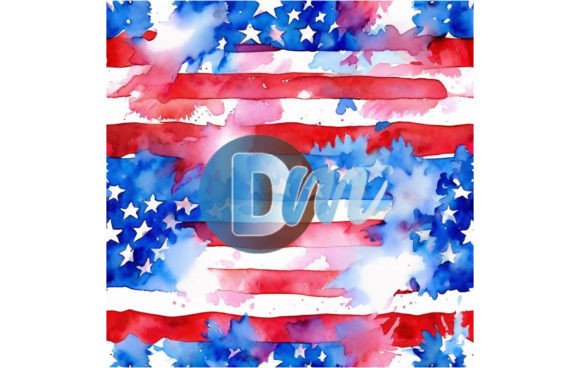
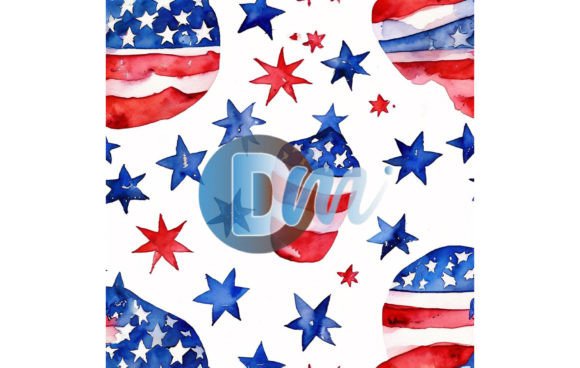
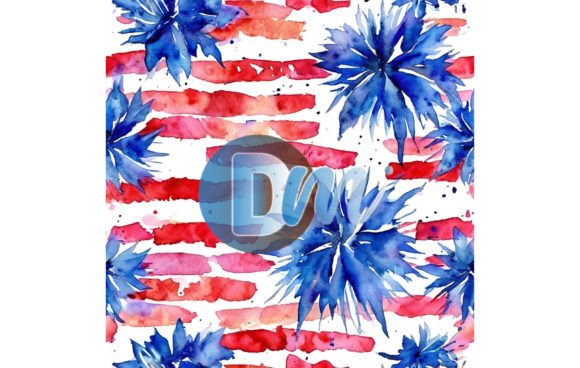
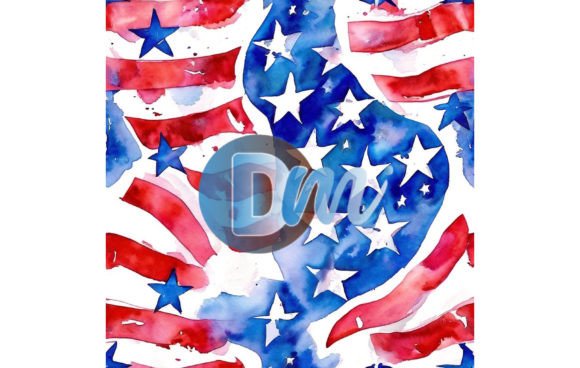
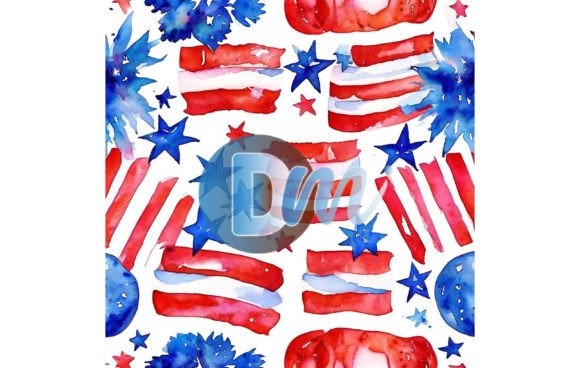
How 4th of July Seamless Pattern 146 Supports Strategic Design and Brand Positioning
When you work with visual assets day in and day out, you develop an eye for what serves a real purpose versus what simply fills space. The 4th of July Seamless Pattern 146 falls into the former category when approached with intention. At first glance, it appears to be a straightforward repeating design built around patriotic motifs. But for anyone who has ever scrambled to produce cohesive seasonal content, manage a brand presence across multiple channels, or create materials that feel both festive and professional, this pattern represents something more valuable than a simple decorative element. It is a ready-made structural tool that can streamline your workflow, reinforce recognition, and save you from reinventing the visual wheel every time a holiday campaign rolls around.
Understanding what makes this particular pattern distinct matters less for its artistic merit and more for how it behaves in real applications. Seamless patterns are designed to tile without interruption, meaning you can scale them across backgrounds, packaging, digital interfaces, textiles, or print collateral without worrying about awkward edges or visual breaks. Number 146 in this series likely incorporates a specific combination of stars, stripes, color balances, or motif density that makes it suitable for certain formats over others. The strategic question is not whether you like the way it looks, but whether it aligns with the goals you are trying to achieve in a given project or campaign.
Why Intentional Pattern Selection Matters More Than Aesthetic Preference
Choosing a pattern based solely on personal taste is one of the most common mistakes I see among entrepreneurs and content creators who are pressed for time. You grab something that feels festive, throw it into a design, and move on. But the 4th of July Seamless Pattern 146 can either elevate your message or compete with it depending on how you use it. When you select it deliberately, you are making a decision about visual hierarchy, readability, emotional tone, and brand consistency all at once.
Consider the practical implications. If you are a small business owner preparing a limited-time offer for Independence Day, your primary goal is likely conversion. The pattern you choose for your landing page background or email header should not distract from your call-to-action. It should create atmosphere without demanding attention. 4th of July Seamless Pattern 146, depending on its density and contrast, may work beautifully as a subtle backdrop or may overwhelm text if used at full opacity. The strategic approach is to test it against your actual content long before the campaign launches.
For creators and educators, the pattern can serve a different function entirely. If you are building a presentation, a printable activity, or a resource guide for a workshop, a seamless pattern provides visual continuity across multiple pages or slides. It signals cohesion and professionalism without requiring you to design every element from scratch. The time saved by using a pre-built pattern like 4th of July Seamless Pattern 146 can be redirected toward refining your message, improving your delivery, or analyzing your audience's response.
Aligning Visual Assets With Campaign Goals And Audience Expectations
Before you commit to any pattern, it helps to clarify what you are trying to accomplish. Are you building brand awareness, driving immediate sales, educating your audience, or simply maintaining a timely presence during a holiday period? Each of these goals calls for a different approach to pattern usage.
- Brand awareness campaigns benefit from consistent visual language. If you use 4th of July Seamless Pattern 146 across your social media graphics, website banner, and email footer, you create a unified look that reinforces recognition even before someone reads your copy.
- Sales-driven content requires restraint. The pattern should support the offer, not compete with it. Consider using it as a border element, a subtle watermark, or a background at reduced opacity so your product images and pricing remain the focus.
- Educational or instructional materials need clarity above all. A pattern can add visual interest to slides or handouts, but it should never make text harder to read. Testing readability against your actual typeface and font size is non-negotiable.
Audience expectations also play a role. A marketer targeting young adults on social media may lean into bolder, more saturated pattern usage, while a financial services firm sending a holiday greeting to clients would likely prefer something more restrained. The 4th of July Seamless Pattern 146 might work in both contexts, but only if you adjust its application scale, opacity, and surrounding design elements accordingly.
Practical Use Cases That Go Beyond Seasonal Decor
The most obvious application for any Fourth of July themed asset is seasonal promotion, but limiting yourself to that single use case ignores the pattern's broader utility. Freelancers and bloggers, for example, can use it to create themed lead magnets, checklists, or downloadables that feel timely and valuable. A pattern that tiles seamlessly allows you to produce multiple assets without starting from zero each time.
Publishers and content teams can integrate the pattern into newsletter templates, article headers, or social media frames. Instead of designing a new background every week leading up to the holiday, you establish one consistent look and rotate the content inside it. This approach reduces production time and strengthens visual identity at the same time.
For product-based businesses, 4th of July Seamless Pattern 146 can be applied to packaging inserts, tissue paper, hang tags, or limited-edition labels. Physical applications introduce additional considerations such as print resolution, color matching, and substrate texture, but the pattern's seamless nature simplifies the production side considerably. You do not need to manually align repeats or worry about visible seams on bags or boxes.
Service providers and consultants might use the pattern sparingly in client-facing materials like proposals, welcome packets, or event slides. The goal here is not to decorate but to signal attention to detail and seasonal awareness. A subtle pattern element on a cover page or section divider can convey thoughtfulness without undermining professionalism.
Decision-Making Guidance Before You Commit To A Pattern
Choosing a pattern is not a one-step decision. It involves evaluating several factors that together determine whether the asset will help or hinder your results. I recommend running through a short checklist before you finalize any design that relies on 4th of July Seamless Pattern 146 or any similar asset.
- Context of use. Where will this pattern appear? Digital screens, print materials, physical products, or all of the above? Each medium has different resolution, color, and scaling requirements.
- Content density. How much text or imagery will sit on top of the pattern? Heavy patterns require lighter opacity or smaller scale to maintain legibility.
- Brand fit. Does the pattern's color palette and motif density align with your existing brand guidelines, or will it clash with your usual look?
- Emotional tone. Does the pattern convey the feeling you intend? Patriotic patterns can evoke pride, celebration, nostalgia, or informality depending on their design details.
- Longevity. Will this pattern still feel appropriate after the holiday passes, or is it strictly time-limited in its usefulness?
These questions are not theoretical. I have seen campaigns where a perfectly good pattern was used at full intensity behind dense text, resulting in a final product that was nearly unreadable. I have also seen patterns used so sparingly that they added no value at all. The difference between those outcomes is not the pattern itself but the decisions made around it.
Risks Of Using Patterns Without Clear Goals Or Context
Relying on a pattern without a clear purpose introduces several risks that can undermine your work. The most immediate is visual noise. A pattern that tiles seamlessly is designed to fill space efficiently, which means it can easily overwhelm other elements if not controlled. When every surface is covered in a busy design, the viewer has no place to rest their eyes, and your key message gets lost.
Another risk is brand dilution. If your brand uses a specific color palette or visual style, introducing a pattern that does not align with it can confuse your audience or make your materials look inconsistent. This is especially dangerous for small businesses and freelancers who rely on every touchpoint to build recognition. Using 4th of July Seamless Pattern 146 without considering how it interacts with your existing identity may save time in the short term but cost you clarity in the long term.
There is also the risk of overuse. When a pattern is too recognizable or appears too frequently across your channels, it can start to feel stale or lazy to your audience. This is why having a deliberate rotation strategy matters. Use the pattern for a specific window of time, then retire it. Let it feel timely rather than permanent.
Finally, there is the operational risk of relying on a single asset for multiple purposes without testing it first. A pattern that looks excellent on a high-resolution monitor may appear muddy when printed at small scale on uncoated paper. A pattern that works well as a full background may fail as a border element because its repeat interval creates awkward cut-offs. Testing is not optional if you care about quality.
Using 4th of July Seamless Pattern 146 As Part Of A Broader Content Strategy
The most effective way to use any design asset is to integrate it into a larger plan rather than treating it as a standalone decoration. When you incorporate 4th of July Seamless Pattern 146 into a content calendar, you can plan its appearance across multiple touchpoints in a way that feels coordinated and purposeful.
For example, if you are a blogger planning a week of Independence Day content, you might use the pattern in your featured image, your email header, and your social media posts. Each instance reinforces the others, creating a cohesive experience for your audience. The key is to vary how the pattern appears. One day it might be a full background, another day it might be a small repeating element in a corner, and another day it might be used as a divider between sections. Variety within consistency keeps the visual identity fresh without breaking the connection between pieces.
Marketers running paid campaigns can test whether pattern-heavy or pattern-light creative performs better with their specific audience. This is the kind of decision that benefits from data rather than assumption. Run two versions of an ad, one with a prominent use of 4th of July Seamless Pattern 146 and one with a minimal application, and see which drives better engagement or conversion. That insight will guide your future pattern choices far more reliably than any design trend.
For entrepreneurs and decision-makers, the pattern can also serve an internal purpose. Presentation decks for team meetings, investor updates, or planning sessions benefit from visual consistency. Using a seasonal pattern in a measured way can make internal communications feel more polished and intentional, which in turn reinforces a culture of quality and attention to detail.
Long-Term Value And Reusability Considerations
One of the underappreciated advantages of a well-designed seamless pattern is its reusability over time. Unlike a one-off graphic that you use once and discard, a pattern like 4th of July Seamless Pattern 146 can be archived and pulled out again for future campaigns. This is where the numbering system becomes useful. If you track which patterns you have used in previous years, you can avoid repeating the same look exactly while still maintaining a library of vetted assets.
Building a pattern library with notes on where and how each pattern was used, what settings worked best, and which formats it was tested in, turns a collection of designs into a strategic resource. Next year when the Fourth of July approaches, you will not have to start from scratch. You will know exactly which patterns performed well, which applications worked, and which adjustments improved the final result.
This kind of systematic approach is what separates reactive content creation from intentional brand building. It is not about having more assets. It is about knowing how to use the ones you have with precision and purpose.
Practical Planning Tips For First-Time Pattern Users
If you have never worked with a seamless pattern in a professional context, the learning curve is manageable but worth respecting. Start with one application rather than trying to deploy it everywhere at once. Test it in a low-stakes environment like a social media post or an internal document before you commit to a large print run or a major campaign asset.
Pay attention to file format and resolution. Seamless patterns are often provided in multiple formats, and the one you choose affects quality. Vector formats allow infinite scaling, while raster formats have fixed resolution limits. If you plan to use 4th of July Seamless Pattern 146 in both digital and print applications, secure a vector version if possible so you can adapt it without degradation.
Consider color adjustment. Many patterns allow for recoloring, and matching the pattern's palette to your brand colors can make it feel like a custom asset rather than an off-the-shelf design. If recoloring is not an option, evaluate the existing colors against your brand guidelines honestly. Forcing a mismatch rarely ends well.
Finally, document what you learn. After your campaign or project concludes, take a few minutes to note what worked, what did not, and how you might approach the pattern differently next time. This practice compounds over multiple cycles and turns every project into a source of strategic insight.
The 4th of July Seamless Pattern 146 is not a magic solution that will fix weak messaging or unclear goals. But as a tactical asset within a thoughtful strategy, it can save time, reinforce consistency, and help you produce work that feels polished and purposeful. The difference between random decoration and strategic design always comes down to the decisions you make before you apply it. Use this pattern, or any pattern, with intention, and it becomes a tool rather than just a texture.