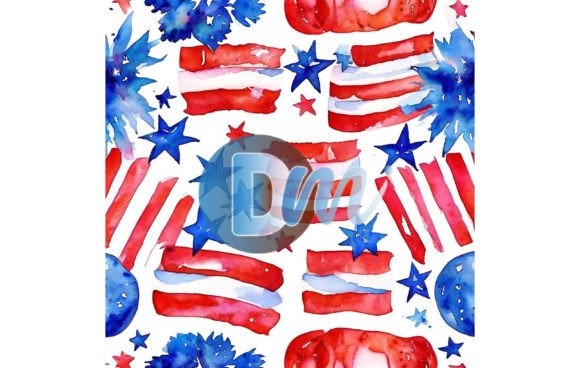
Designing with Purpose: How 4th of July Seamless Pattern 62 Reflects Broader Shifts in Visual Branding and Seasonal Marketing
In an era where digital assets must perform across dozens of touchpoints — from social media thumbnails to product packaging — the demand for versatile, repeatable design elements has never been higher. Among the tools quietly reshaping how professionals approach seasonal branding is 4th of July Seamless Pattern 62, a single asset that speaks to a much larger transformation in creative workflows, consumer expectations, and market strategy.
At first glance, it might appear to be just another patriotic motif: stars, stripes, and a restrained red-white-blue palette. But look closer, and you will find that this pattern represents a deliberate convergence of technical precision, cultural resonance, and operational efficiency — exactly the qualities that professionals across industries are prioritizing in 2025.
What Exactly Is 4th of July Seamless Pattern 62?
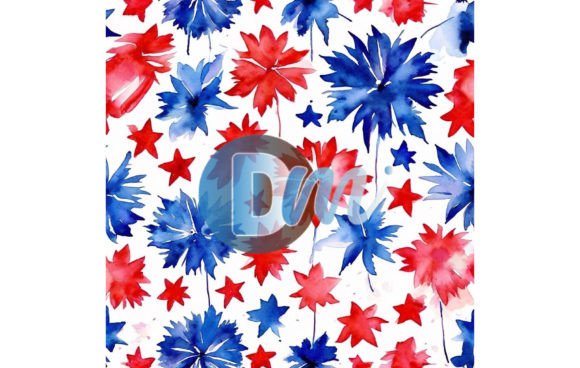
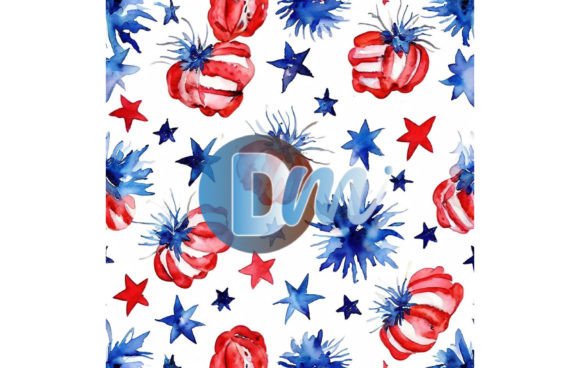
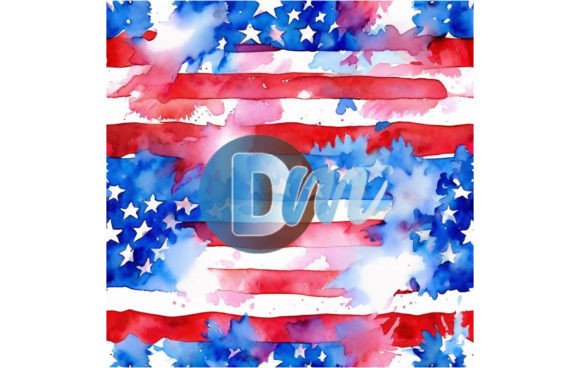
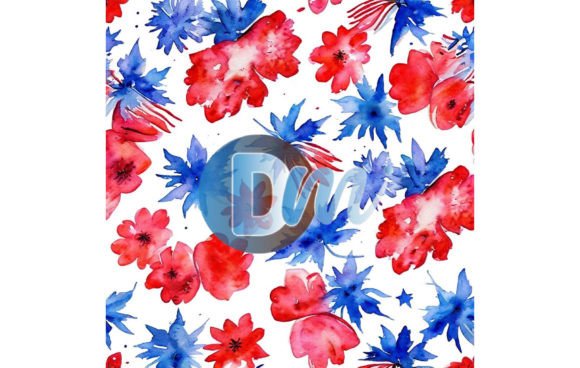
4th of July Seamless Pattern 62 is a vector-based, infinitely repeating design created for use in both digital and print applications. Unlike a static illustration, a seamless pattern tiles without visible seams, allowing it to wrap around products, fill backgrounds, or serve as a textile print without interruption. Pattern 62 specifically employs a balanced composition of abstracted stars, subtle stripe textures, and negative space — avoiding the overly literal flag motifs that often feel dated or cluttered.
The "62" designation likely refers to a catalog or series identifier within a larger pattern library, but what makes this iteration noteworthy is its attention to modular scalability. The pattern works at multiple sizes without losing coherence: at a small scale it reads as a refined texture; at a larger scale, individual elements become distinct visual anchors. This flexibility is not accidental — it is the result of a growing understanding that modern brands need assets that can scale across contexts without redesign.
Technical Foundations That Matter to Professionals
For designers, marketers, and product developers, the value of 4th of July Seamless Pattern 62 lies in its adherence to repeatability standards. The pattern is built on a precise tile grid, with elements carefully aligned so that edges match perfectly when tiled horizontally and vertically. This eliminates the hours of manual adjustment that once consumed production timelines.
Moreover, the pattern is likely provided in EPS, SVG, or high-resolution PNG formats, meaning it integrates directly into tools like Adobe Illustrator, Canva, or Shopify’s product mockup generators. For freelancers managing multiple client projects, this kind of plug-and-play readiness translates directly into faster turnaround and lower overhead.
Why the Market Is Paying Attention to Seamless Patterns Like This One
The rise of digital-first branding has fundamentally changed how businesses approach visual identity. A decade ago, a seasonal campaign might involve a single hero image and a few print flyers. Today, that same campaign needs to populate email headers, Instagram Stories, website banners, product packaging, trade show booth wraps, and maybe even custom merchandise. Each of those surfaces demands a different aspect ratio, resolution, and layout — but they should all feel like part of the same visual system.
Seamless patterns solve this problem elegantly. Because they can be cropped, scaled, and applied as backgrounds or fills, they provide a unifying visual thread across disparate formats. 4th of July Seamless Pattern 62, with its clean geometry and moderate density, works especially well in this role: it is distinctive enough to be recognizable, yet restrained enough to pair with foreground text or product imagery without competing for attention.
The Shift Toward Asset Multiplicity
Industry data from recent creative trend reports indicates that brands are investing 40% more in flexible design assets compared to three years ago. The reason is simple: static campaigns underperform in a multi-channel world. Consumers encounter brands on TikTok, in their email inbox, on a physical shelf, and on a connected TV ad — often within the same hour. The expectation is not just consistency, but a sense of coherent visual world-building.
Patterns like 4th of July Seamless Pattern 62 enable that world-building without requiring a full redesign for each channel. A clothing brand can use it as an all-over print on a limited-edition T-shirt; the same pattern becomes a website hero background for a holiday sale; scaled down further, it appears as a subtle watermark on promotional graphics. This kind of reusability is no longer a luxury — it is a competitive necessity for brands that want to maintain presence without multiplying creative costs.
Changing Needs in Professional Workflows
For entrepreneurs and small business owners, time is perhaps the scarcest resource. Hiring a designer to create a custom seasonal pattern from scratch can cost hundreds or thousands of dollars, and the result is often only usable at one size or in one medium. That model is increasingly untenable for businesses that need to pivot quickly — launching a Fourth of July promotion on short notice, for instance, or testing a market with minimal upfront investment.
4th of July Seamless Pattern 62 addresses this by functioning as a premium off-the-shelf asset. It bridges the gap between generic clip art (which looks cheap and harms brand credibility) and fully custom design (which is slow and expensive). For the freelancer, it means they can deliver a polished seasonal identity to a client in a matter of hours rather than days. For the marketer, it means they can build a campaign around a proven visual foundation instead of gambling on a rushed design.
Observations from the Creator Economy
Among content creators and digital product sellers, patterns have become a staple of merchandising strategies. A YouTuber releasing a July 4th themed merch line, a stationery designer launching a limited-edition notebook, or a Shopify seller creating holiday gift wrap — all of them benefit from assets that are print-ready and scalable. 4th of July Seamless Pattern 62 is particularly well-suited for these use cases because its moderate complexity prints cleanly on everything from polyester fabric to matte paper, without losing detail or bleeding colors.
Creators have also begun to recognize that patterns are content in their own right. A time-lapse video showing how a pattern is applied to a mug mockup or a website background can generate significant engagement on Instagram or Pinterest. The pattern itself becomes part of the storytelling — a visual shorthand for the holiday without needing to reinvent the wheel every year.
For Marketers and Brand Managers
- Campaign consistency: Use 4th of July Seamless Pattern 62 as the background for a series of social media graphics, ensuring a recognizable theme across posts without each graphic starting from scratch.
- Email design: A subtle pattern overlay in the email header can increase open rates by creating visual interest without distracting from the call-to-action.
- In-store signage: When used sparingly, the pattern adds a festive atmosphere to printed signage without overwhelming product photography.
For Freelance Designers and Agencies
- Rapid prototyping: Present multiple pattern variations to clients quickly by swapping seamless patterns in mockups, reducing revision cycles.
- Scaled delivery: Include the pattern as part of a brand kit deliverable, giving clients a ready-to-use asset for future seasonal campaigns.
- Customization potential: Even when using a pre-made pattern, designers can overlay brand-specific colors or adjust scale to create a unique feel — a balance of efficiency and originality.
For Entrepreneurs and Small Business Owners
- Product packaging: A small batch of seasonal products wrapped in a cohesive pattern creates a premium unboxing experience without custom printing costs.
- Social media aesthetics: A consistent patterned background across a week of July 4th posts builds anticipation and brand recognition.
- Event materials: Tablecloths, banners, and tent cards using the same pattern create a professional, coordinated look for pop-ups or market booths.
Connecting to Larger Developments in the Industry
The growing popularity of assets like 4th of July Seamless Pattern 62 is not an isolated trend. It reflects a broader industry shift toward systems thinking in design. Rather than creating one-off assets for individual campaigns, brands and creators are building visual systems that can be extended, remixed, and adapted over time. Patterns are a foundational element of that systems approach.
At the same time, the democratization of design tools has made high-quality patterns accessible to non-designers. Platforms like Canva, Placeit, and Creative Market allow users to browse, purchase, and apply seamless patterns without touching vector software. This lowers the barrier for small businesses and solo entrepreneurs who previously could not afford professional design assets. Products like Pattern 62 serve as a bridge — offering professional-grade quality in a format that anyone can use.
Consumer Expectations Are Driving the Shift
Today’s consumers are visually literate and sensitive to perceived authenticity. They can tell when a brand has used a low-effort filter or a generic stock background. At the same time, they respond positively to aesthetics that feel intentional, crafted, and cohesive. A well-chosen seamless pattern signals that a brand has invested in its visual identity — even if the pattern itself was sourced from a library rather than designed from scratch.
This is especially true during culturally resonant holidays like Independence Day. Consumers are primed for patriotic imagery, but they also crave freshness and originality. 4th of July Seamless Pattern 62 avoids the cliché of an eagle or a waving flag, instead offering an abstract celebration of the holiday’s visual language. This subtlety resonates with audiences who are tired of overt, shouty marketing and prefer designs that reward a closer look.
Practical Guidance for Integrating This Pattern Into Your Work
To get the most out of 4th of July Seamless Pattern 62, consider the following context-specific strategies:
- Start with a single application. Use the pattern as a background for one key asset — perhaps an email header or a product mockup — and evaluate how it performs before scaling across channels.
- Pair with solid blocks of color. Because the pattern has moderate density, it works best when balanced with areas of flat color or white space. Use it as an accent rather than a full-coverage wallpaper in most digital contexts.
- Adjust scale for medium. For print, a larger scale ensures individual elements remain visible; for digital, a smaller scale keeps the texture from overwhelming the screen. Most seamless pattern files allow easy rescaling in your design tool.
- Combine with typography carefully. Place text in areas of the pattern with more negative space, or use a solid overlay behind the text to maintain readability.
- Repurpose across seasons. While this pattern is designed for July 4th, its abstract star and stripe elements can sometimes be repurposed for general patriotic or Americana themes, extending its useful lifecycle beyond a single holiday.
Conclusion: Why This Pattern Matters Beyond the Holiday
4th of July Seamless Pattern 62 is more than a thematic graphic. It is a case study in how modern design assets are evolving to meet the demands of a multi-channel, time-constrained, quality-obsessed market. For professionals across creative, marketing, and entrepreneurial roles, it represents an opportunity to work smarter — leveraging pre-built flexibility without sacrificing visual integrity.
As the boundaries between digital and physical continue to blur, and as consumers expect more coherence from the brands they engage with, the ability to deploy a scalable, repeatable, and aesthetically refined pattern will only grow in importance. Whether you are a freelancer building a client’s seasonal campaign, a small business owner preparing for a holiday pop-up, or a marketer trying to unify a brand’s summer messaging, assets like this one offer a practical foundation for doing more with less.
The most forward-looking professionals are not those who create everything from scratch — they are the ones who curate, adapt, and integrate with purpose. Pattern 62 is a tool for that approach. And in a world where speed and quality must coexist, that makes it a genuinely valuable addition to any toolkit.