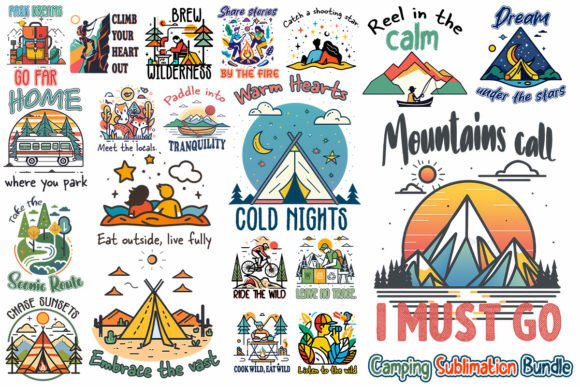
The Tent Camping Watercolor Clipart Bundle
Every seasoned designer knows that finding the right visual asset can make or break a project. You’re hunting for something that feels genuine—not overly polished or generic. That’s exactly where The Tent Camping Watercolor Clipart Bundle steps in. It’s not just a collection of cute illustrations; it’s a carefully curated set of hand-painted elements that carry the warmth and texture of real watercolor. The washes are soft but intentional, with subtle granulation and bleeding edges that mimic paper and brush. The palette leans toward earthy greens, warm browns, muted blues, and soft yellows—colors that feel lifted straight from a morning campsite. Tents, campfires, pine trees, lanterns, mugs, logs, and night skies all appear with a gentle, organic hand. There’s no harsh vector outline here. Instead, you get shapes that breathe, with irregular borders and slight transparency shifts. That kind of imperfection is what gives the bundle a personality that’s approachable, nostalgic, and quietly adventurous. It doesn’t scream for attention; it invites viewers in.
Where Watercolor Clipart Elevates Real Projects
If you’re running a brand that sells outdoor gear, eco-friendly products, or adventure experiences, this bundle becomes an immediate asset. The organic style aligns well with brands that value authenticity over slickness. Think about a camping gear retailer updating their social media graphics for spring. Rather than using stock photography that everyone has seen, you can drop a watercolor tent silhouette behind a product shot or weave pine branches around a promotional offer. The effect feels crafted, not templated.
For editorial designers working on travel magazines, outdoor lifestyle blogs, or even children’s books, the bundle serves as both primary art and accent decoration. A spread about weekend backpacking gains warmth when you place a watercolor campfire scene beside the headline. The soft edges work beautifully in print because they don’t clash with text columns. And because the elements are isolated, you can layer them, resize them, or combine them with typography without wrestling with background removal.
Marketers and social media managers will find these assets especially useful for seasonal campaigns. Fall camping promotions, summer road trip guides, or winter cabin retreats all benefit from the consistent visual language. You can build an entire Instagram carousel around a single tent illustration, changing the background color or adding different foliage elements from the bundle. The versatility comes from the fact that watercolor textures scale well both digitally and on printed materials—flyers, stickers, postcards, and even merchandise like mugs or tote bags.
Hobbyists and crafters shouldn’t sleep on this either. If you run an Etsy shop selling printable wall art or planner stickers, the handmade look of watercolor clipart tends to sell better than flat digital vectors. Customers associate watercolor with quality and care. A set of camping-themed stickers made from this bundle can feel like a premium product even if you’re printing them at home on matte paper.
Brand Perception and the Value of Handcrafted Visuals
There’s a reason why modern typography and handwritten fonts have surged in popularity alongside watercolor illustrations. Audiences have grown tired of sterile, corporate visuals. They want proof that a human being was involved. When you use watercolor clipart, you communicate that your brand pays attention to texture and emotion. The bundle doesn’t look like it was output from a generic template. It looks like someone sat down with a brush and pigment, which signals care and effort. That perception transfers to your audience. They see the tent illustration, feel the subtle color variation, and associate your brand with something handmade, small-batch, or community-driven. That’s powerful for startups, local businesses, and lifestyle influencers who need to differentiate from mass-market competitors.
Readability and visual hierarchy also benefit from this kind of asset. Because watercolor elements have natural lighter and darker areas, you can position them behind text without completely obscuring it. A pale wash of sky or a lightly painted tree can serve as a background that adds depth without competing with headlines. For logo design, you can extract a single tent or mountain element and pair it with a clean sans serif to create a mark that feels both contemporary and rooted in nature. The bundle doesn’t force you into a specific layout; it gives you raw material that you can adapt to your hierarchy needs.
Practical Guidance for Choosing and Using the Bundle
Before you start downloading, take a moment to assess your project’s needs. This bundle works best when the subject matter is outdoor, nature-focused, or travel-related. If your brand identity leans heavily industrial, minimal, or futuristic, watercolor elements may clash unless you use them sparingly as a counterpoint. The key is fit, not force. Evaluate whether the soft, organic texture aligns with your audience’s expectations. A rugged camping brand can absolutely use it. A luxury resort might find it too casual—unless they’re going for a rustic-chic angle.
When testing font pairings, consider the brush-like quality of the clipart. A script font with natural stroke variation can echo the watercolor fluidity nicely. Alternatively, a clean sans serif font provides contrast that lets the illustrations breathe without visual clutter. If you’re building a brand guide, try pairing the bundle with a serif font for headlines and a sans serif for body copy. The serif adds a touch of tradition that complements the handmade look, while the sans keeps the layout readable on screens.
Commercial licensing is another area to verify early. Most clipart bundles, including this one, offer standard commercial use for products you create—social media posts, printed goods, website graphics. But if you plan to incorporate the elements into a brand identity or logo design that you sell to a client, check whether extended licensing is required. Some bundles restrict resale of the raw assets but allow derivative works. Knowing this upfront saves you from legal headaches later.
Readability, Consistency, and Audience Engagement
One underappreciated strength of The Tent Camping Watercolor Clipart Bundle is how it handles consistency across a campaign. Because every element is rendered in a similar watercolor style, you can mix and match without worrying about clashing aesthetics. A campfire, a tent, a pine cone, and a coffee mug all feel like they belong to the same world. That consistency helps with brand recognition. When followers see your post, they immediately associate the visual language with your brand. Over time, that repeated exposure builds trust. You become the brand that uses warm, approachable outdoor art—not random stock images.
Audience engagement also gets a boost from emotional resonance. Watercolor art triggers a tactile memory. People remember painting with watercolors as kids, or they associate the texture with art prints and handmade cards. When they see your content using these assets, they slow down. They linger longer. That extra second or two of attention can be the difference between a scroll-past and a click-through. For bloggers and publishers, this means higher time on page. For marketers, it means better conversion rates on call-to-action buttons placed near the artwork.
If you’re designing for print—posters, packaging, or brochures—the watercolor texture also handles halftones and gradients naturally. It doesn’t posterize or band like some digital gradients do. The subtle color shifts in the original painting translate well to CMYK printing, especially on uncoated paper stocks that absorb ink and add further texture. That’s something flat vector art struggles to replicate.
Final Recommendations for Getting the Most Out of the Bundle
Start by isolating your core elements. Pick three to five pieces that best represent your brand’s message. Use those as your primary visual anchors across all platforms. Then, rotate in secondary elements for seasonal campaigns or specific promotions. Don’t feel pressured to use every piece in one design. Negative space matters, and watercolor works best when it has room to breathe.
Experiment with layering opacity. In Photoshop or Canva, duplicate a tent or tree element, reduce the opacity of the top layer to 30 or 40 percent, and nudge it slightly. You’ll create a subtle double-wash effect that looks like a second pass with wet paint. That technique adds depth without needing additional assets.
Finally, keep your backgrounds simple. White, cream, or soft pastel backgrounds let the watercolor hold the spotlight. Busy patterns or dark backgrounds can overwhelm the delicate washes. If you do use a dark background, apply a light multiply blend mode or a white stroke to the clipart so it separates clearly.
The Tent Camping Watercolor Clipart Bundle is the kind of resource that rewards thoughtful use. It’s not a one-click solution; it’s raw material that responds to a designer’s eye. When you treat it with the same care the original artist used, the results feel genuinely personal. And in a world saturated with generic visuals, that personal quality is what makes people stop, look, and remember.