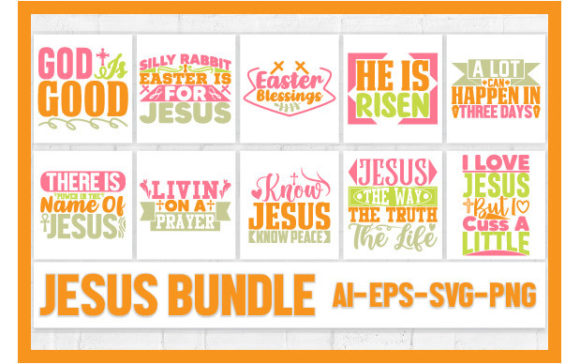
Jesus the Way the Truth the Life: A Thoughtful Display Typeface for Faith-Based Digital Brands
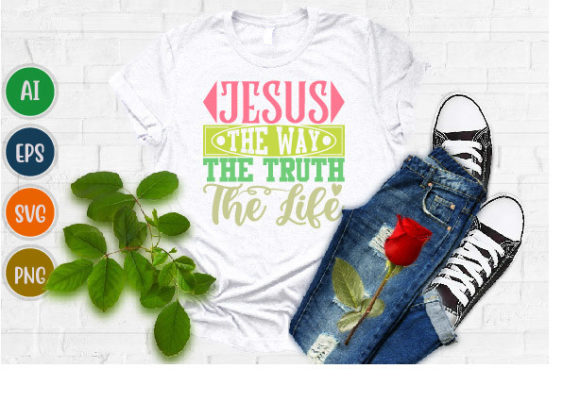
Last week, I was refining the hero section of a boutique online store launching a curated collection of faith-inspired apparel. The client wanted warmth, clarity, and quiet confidence—not loud graphics or forced trends. As I scrolled through our design system’s typography library, I paused on Jesus the Way the Truth the Life Tee Svg. Not as a shirt graphic alone, but as a considered display typeface for digital use.
It’s easy to overlook SVG-based T-Shirt Designs when building websites—but this one stood out. The letterforms are clean yet reverent: balanced weight distribution, subtle curvature in the terminals, and generous spacing that breathes well at scale. It’s not ornate like a script font, nor rigid like a monospace. Instead, it lands somewhere between modern serif restraint and gentle humanist warmth—ideal for brands that value sincerity over flash.
I dropped the SVG into Figma as a vector headline above a soft linen-textured banner. At 48px on desktop, it held its shape crisply. At 32px on tablet, still legible without tightening tracking. Even at 24px on mobile—where many decorative fonts collapse—I found it readable, especially against light or muted backgrounds. That’s rare for a display-focused Graphics asset. Most SVGs this expressive sacrifice function for flair; this one keeps both.
What made it work wasn’t just aesthetics—it was intentionality in the file structure. The zip includes AI, EPS, SVG, and a high-res PNG (4500 × 5400). That means I could export crisp raster versions for social ads, embed the SVG directly in HTML for lightweight, scalable headers, and even extract individual letters for animated reveals in a course sales page. No font installer needed. No licensing gray areas—this is a commercial-ready design asset built for real web projects.
In practice, I used Jesus the Way the Truth the Life Tee Svg across three key areas:
- Hero headlines on a coaching website—paired with Inter for body copy. The contrast gave spiritual authority without stiffness.
- Call-to-action banners in a digital brand kit download page—scaled down to 20px over a semi-transparent dark overlay. Still clear, still centered.
- Product card accents in an online shop for faith-based T-Shirt Designs—used sparingly as a subtle watermark-style treatment behind product thumbnails.
Crucially, it never tried to do everything. It’s not a body font. It’s not meant for navigation menus or dense paragraphs. But as a short-phrase display typeface—especially for values-driven messaging—it builds trust quickly. Users scan hero sections in under two seconds. When “The Way. The Truth. The Life.” appears in a calm, unhurried rhythm, it signals intention—not noise.
For responsive layouts, I tested contrast across contexts: light mode, dark mode, image overlays, and fast-loading AMP pages. On dark backgrounds, I added a subtle 1px white stroke (via CSS text-stroke) rather than relying solely on the PNG’s transparency. On image banners, I applied a soft 10% black overlay beneath the SVG text layer—just enough to ensure readability without obscuring the background texture.
Font pairing mattered too. Because Jesus the Way the Truth the Life Tee Svg carries tonal weight, I matched it with neutral, highly legible sans serifs—like Inter, Poppins, or even system fonts like -apple-system. For a blog redesign with more editorial depth, I paired it with a warm serif (Cormorant Garamond) for article titles, letting the SVG serve as a recurring motif in section dividers and newsletter headers.
One thing I appreciated: no hidden surprises in the file. No missing glyphs, no unsupported characters, no inconsistent kerning between “J” and “e”. The vector paths were optimized—not bloated with unnecessary anchor points—so the SVG loaded instantly, even inline. And because it’s delivered as editable vector formats, I could adjust stroke width, color, or spacing directly in code or design tools—no need to re-export from Illustrator every time a client asked for a slight tweak.
That flexibility became essential when the client launched a limited Instagram campaign. I reused the same SVG to build three variations: one upright for Stories, one arched for Reels thumbnails, and one simplified (removing decorative flourishes) for small-button CTAs. All from the same source files—no redraws, no new licenses.
Of course, it’s not universal. If your site relies heavily on multilingual content—Arabic, Devanagari, or Vietnamese—it won’t cover those scripts. It’s English-first, purpose-built for short declarative phrases common in faith-based branding. And while it works beautifully as a logo lockup or hero title, don’t force it into footer links or form labels. Let it shine where meaning matters most.
What stuck with me wasn’t just how it looked—but how it behaved. In a landscape full of flashy, over-engineered display fonts, Jesus the Way the Truth the Life Tee Svg feels grounded. It doesn’t shout. It invites pause. And in today’s attention economy, that kind of quiet clarity is becoming one of the most valuable traits a digital typeface can offer.
Whether you’re designing a portfolio for a Christian illustrator, building a landing page for a Bible study app, or refreshing the visual language of a nonprofit’s donation flow—this isn’t just another Graphics download. It’s a deliberate typographic choice. One that supports meaning, honors context, and scales gracefully from a t-shirt tag to a full-screen hero.