Evaluating 4th of July Seamless Pattern 136: A Practical Review for Designers and Content Creators
When searching for a patriotic backdrop for Independence Day projects, the sheer number of available options can be overwhelming. Among the recurring listings in digital marketplaces, one specific asset has drawn consistent attention: 4th of July Seamless Pattern 136. This article offers a balanced, objective evaluation of this pattern, helping you determine whether it aligns with your specific design goals, project requirements, and creative workflow. We will explore what it is, why it might appeal to you, the practical tradeoffs involved, and the scenarios where it either shines or falls short.
What Is 4th of July Seamless Pattern 136?
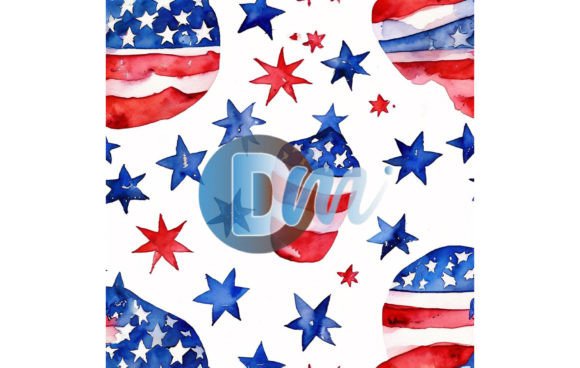
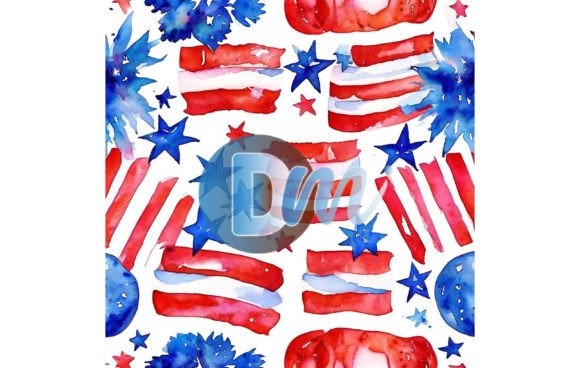
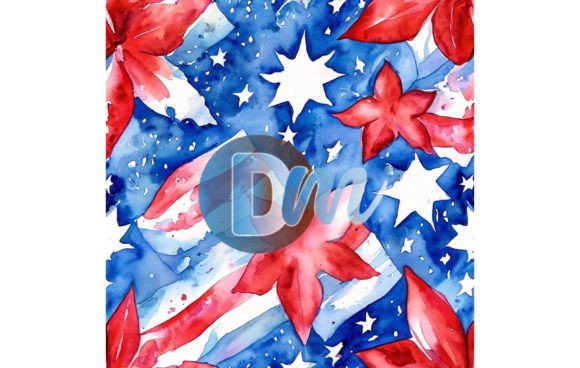
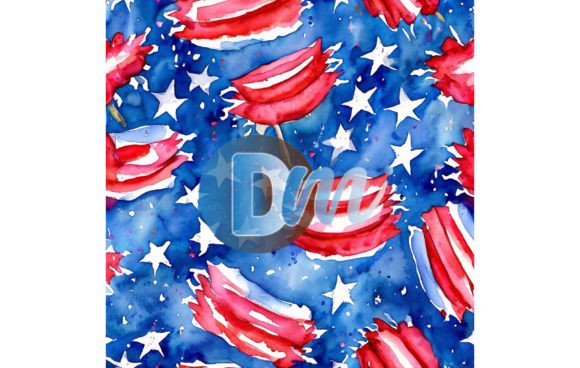
At its core, 4th of July Seamless Pattern 136 is a digitally created repeating tile designed to evoke the visual spirit of American Independence Day. The "seamless" designation means the pattern repeats without visible edges or interruptions, making it suitable for covering large surfaces—from fabric prints and gift wrap to website backgrounds and presentation slides. The "136" likely refers to a catalog or series identifier within a larger library of themed patterns, distinguishing this particular arrangement of stars, stripes, colors, and motifs from others in the same collection.
While specific visual details can vary between vendors, patterns in this category typically incorporate a balanced mix of red, white, and blue elements. They often feature stars, stripes, fireworks, or abstract geometric shapes arranged in a way that tiles flawlessly. The key attribute is that it is a ready-to-use asset, meaning a designer does not need to construct the repeat from scratch. Instead, they can download, import, and apply it directly.
Why Might You Be Interested in This Pattern?
Understanding your motivation for evaluating this pattern is the first step toward a good decision. People typically explore seamless patterns like this one for several practical reasons:
- Time efficiency: Creating a custom seamless pattern from scratch requires careful alignment, color matching, and tiling tests. A pre-made pattern eliminates that labor.
- Thematic consistency: If you need a cohesive 4th of July aesthetic across multiple deliverables (e.g., social media graphics, email headers, product packaging), a single pattern source ensures visual harmony.
- Cost-effective design: Compared to commissioning a custom pattern or purchasing a full design suite, a single pattern file is often a low-cost alternative that still delivers professional results.
- Versatility: Seamless patterns can be scaled, rotated, and overlaid, giving you flexibility in how you apply the asset across different media.
Each of these reasons points to a core benefit: the pattern is a shortcut to a polished, patriotic look without requiring deep expertise in pattern design.
Benefits and Strengths: Where This Pattern Excels
When 4th of July Seamless Pattern 136 is a good match for your project, you can expect several concrete advantages:
Professional-Grade Tiling
The most important technical requirement for any seamless pattern is that the repeat actually works. A poorly constructed pattern shows visible seams, abrupt color shifts, or awkward motif clipping. A well-made asset like this one is built to tile perfectly across any canvas size, whether you are applying it to a small business card or a large banner. This reliability saves you from having to manually patch edges or adjust alignment in software like Photoshop, Illustrator, or Procreate.
Consistent Color Palette
Patriotic themes can easily become visually chaotic if colors clash or if the red, white, and blue saturations are mismatched. A curated pattern typically uses a disciplined palette that balances warm and cool tones. This makes it easier to pair the pattern with other design elements—such as typography, logos, or photographs—without creating visual tension. If you are designing a flyer or a digital invitation, a cohesive palette reduces the risk of amateur-looking results.
Scalability Without Loss
Most seamless patterns are delivered as vector files (such as EPS or AI) or high-resolution raster images (like PNG or JPG). Vector formats are resolution-independent, meaning you can scale the pattern from a tiny icon to a billboard-sized graphic without losing sharpness. This is a significant advantage if you anticipate using the same asset across multiple contexts with very different size requirements.
Tradeoffs, Limitations, and Realistic Considerations
No design asset is universally perfect. To make an informed decision, you must weigh the benefits against the tradeoffs that come with using a pre-made pattern.
Limited Originality and Uniqueness
Because the pattern is a commercial asset sold or distributed to many users, you are not the only one who will have access to it. If your project requires a high degree of originality—such as a branded campaign for a major client, or a unique product line that needs to stand apart from competitors—using a widely available pattern may dilute distinctiveness. Your design could end up looking similar to someone else's work, which may be undesirable if brand differentiation is a priority.
Customization Constraints
Although you can apply the pattern to different shapes and scales, the underlying motif arrangement is fixed. You cannot easily add, remove, or rearrange individual stars, stripes, or other elements without editing the original file. If your design calls for a specific layout (e.g., a star in a precise location or a custom color shift to match brand guidelines), you may need to invest additional time in editing or layering, which can partly negate the time-saving benefit.
File Format and Software Compatibility
Depending on where you download the pattern, it may come in formats that not all software supports. For instance, a pattern packaged as a Photoshop PAT file will not work in Canva or Affinity Designer without conversion. Similarly, an SVG or EPS file may require vector editing skills to manipulate. Before purchasing or downloading, verify that the file format is compatible with your primary design tools. If you work primarily in web-based platforms, a raster PNG with a transparent background might be more practical than a vector file intended for professional desktop software.
Theme Specificity
The pattern is intentionally narrow in theme. Outside of the 4th of July season or projects explicitly about American patriotism, the design has limited reuse value. If you are building a versatile design library, a highly specific seasonal pattern may not justify the storage space or expense compared to more neutral or evergreen assets. Consider whether you will use it repeatedly or just once.
Scenarios Where This Pattern Is a Strong Fit
Knowing when to choose 4th of July Seamless Pattern 136 can save you time and frustration. The following situations are particularly well-suited:
- Small business promotions: If you run a local bakery, boutique, or service business and need quick, attractive social media posts, menu inserts, or window signage for Independence Day, a seamless pattern gives you an instant festive backdrop.
- Personal projects: For event invitations, party decorations, or scrapbooking, the pattern provides a polished look without requiring professional design skills. It is ideal for DIY enthusiasts who want a cohesive theme.
- Classroom or educational materials: Teachers creating handouts, bulletin boards, or digital slides for a lesson on American history or symbols can use the pattern to add visual interest without distracting from content.
- Mockups and prototypes: If you are presenting a concept to a client or stakeholder and need to convey a patriotic vibe quickly, the pattern functions as a placeholder that looks complete and intentional.
Scenarios Where Alternatives May Be Worth Considering
Conversely, there are situations where this pattern may not be the best choice:
- High-volume commercial printing: Some pre-made patterns come with usage licenses that restrict resale, large-scale distribution, or use on merchandise. Always check the license terms. If you are designing items for resale (e.g., T-shirts, mugs, wrapping paper), you may need a pattern with a commercial license or a custom design to avoid legal issues.
- Brand-specific campaigns: If a client demands a unique visual identity that aligns precisely with their logo, color palette, and messaging, a generic pattern will likely fall short. In that case, commissioning a bespoke pattern or building one from scratch using brand colors and proprietary elements is the safer route.
- Long-term or multi-season use: If you need a pattern that can transition across multiple holidays or serve as a general Americana background (e.g., for a year-round patriotic brand), a pattern tied exclusively to July 4th may feel stale after the holiday passes. A more subtle motif—such as a faded flag texture or a neutral star pattern—might offer greater longevity.
- Minimalist or modern aesthetics: The pattern likely contains multiple elements and a busy composition. If your design philosophy leans toward minimalism, clean lines, or negative space, a dense celebratory pattern may clash with your overall visual direction.
Practical Decision-Making Insights
To determine whether 4th of July Seamless Pattern 136 is right for you, consider the following practical steps:
- Audit your project needs. List the deliverables you plan to create. How many of them will use the pattern? Will it be a dominant background or a subtle accent? Matching the pattern's visual density to your project's tone is critical.
- Check the license. Before committing, read the terms of use. Look for restrictions on commercial use, redistribution, and print-on-demand services. If the license does not match your intended application, move on to an alternative.
- Test the tile. Whenever possible, download a sample or preview image and test the repeat in your software. Pay attention to edge alignment, color consistency, and how the pattern looks at different scales. A quick test can save you from discovering flaws mid-project.
- Evaluate your editing skills. If you need to modify colors or elements, assess whether you have the software proficiency to make those changes. If not, a pattern that closely matches your final vision from the start will save you headaches.
- Compare with alternatives. Look at other patterns in the same series or from different creators. Sometimes a slightly different arrangement of stars or a different blue tone may better support your layout or brand colors.
Helping You Align the Pattern with Your Goals
Ultimately, the value of 4th of July Seamless Pattern 136 depends on how well it fits your specific context. If your primary goals are speed, consistency, and a classic patriotic aesthetic, this pattern is likely a strong, practical choice. It removes the technical burden of creating a repeat pattern from scratch and gives you a professional-grade asset that works across print and digital media. The tradeoffs—limited uniqueness, potential licensing constraints, and seasonal specificity—are manageable if you plan ahead and use the pattern thoughtfully.
On the other hand, if your project demands originality, strict brand alignment, or year-round versatility, you should weigh those factors carefully. In those cases, the pattern may still serve as a starting point or a source of inspiration, but a custom or more adaptable solution might better serve your long-term needs. By approaching your evaluation with clear priorities—technical requirements, aesthetic fit, licensing, and usage frequency—you can make a confident decision that supports your creative or professional objectives.